Mineralogical Society of America, Founded December 30, 1919
Order Publications Online (25% discount for MSA, CMS and GS members, except shipping)
MinPubs.org Pay-Per-View GeoScienceWorld Pay-Per-View
2006 i-xxii + 772 pages. ISBN 0-939950-72-3; ISBN13 978-0-939950-72-0
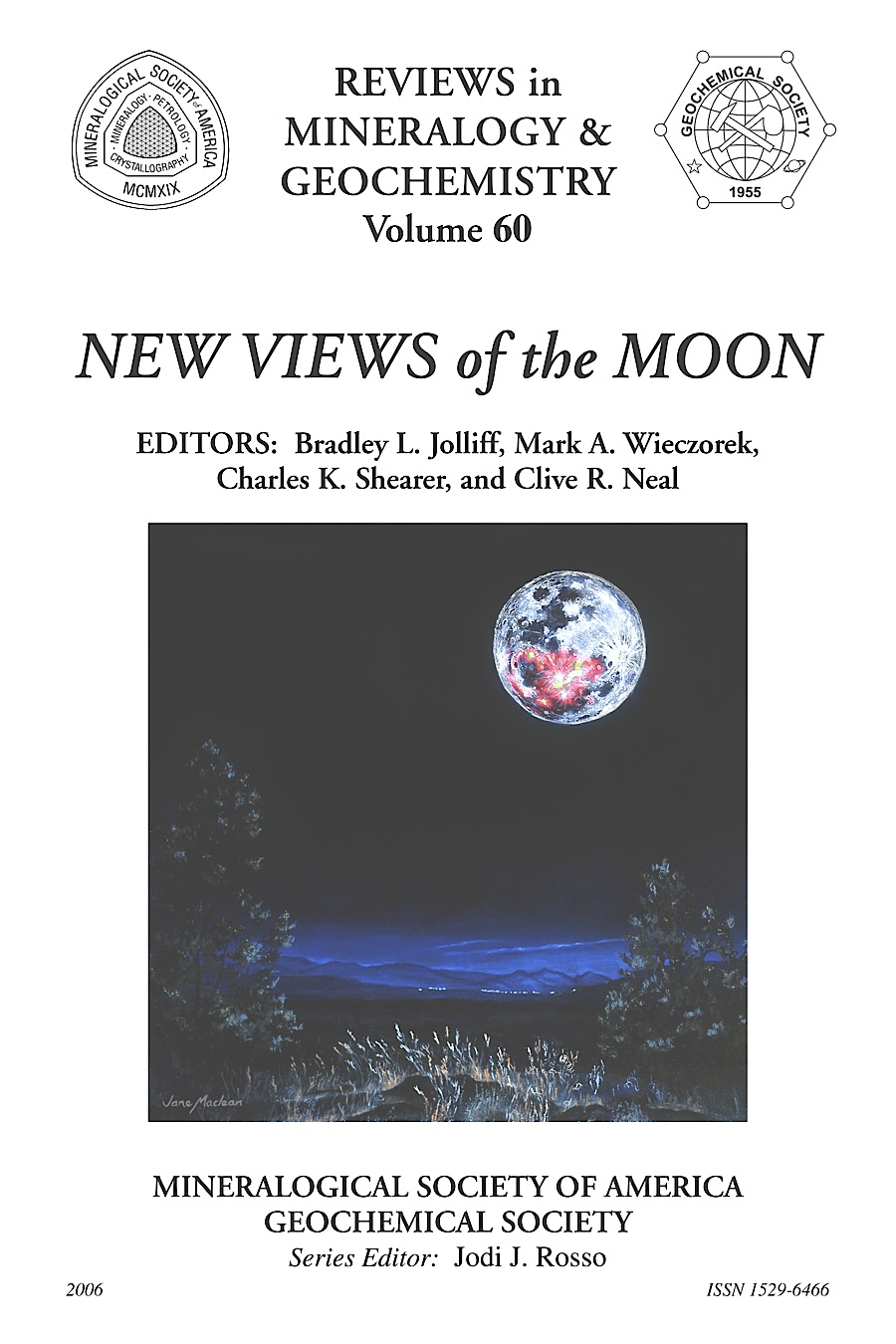
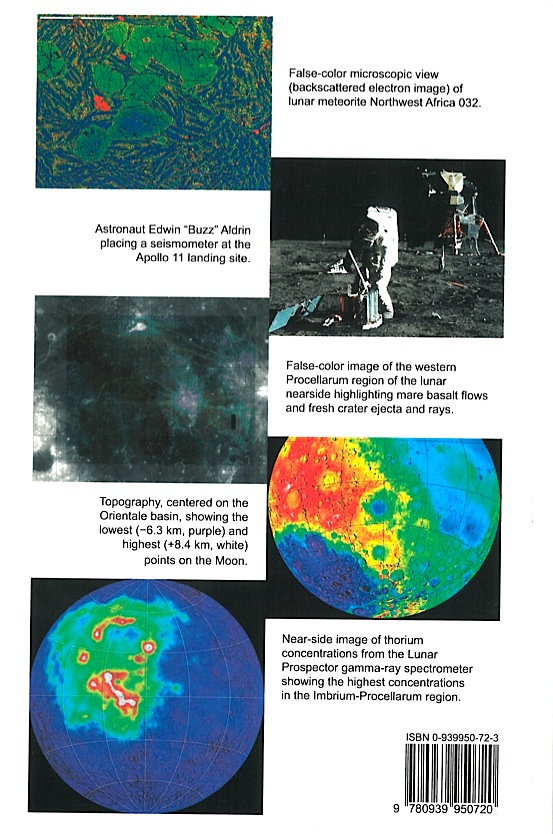
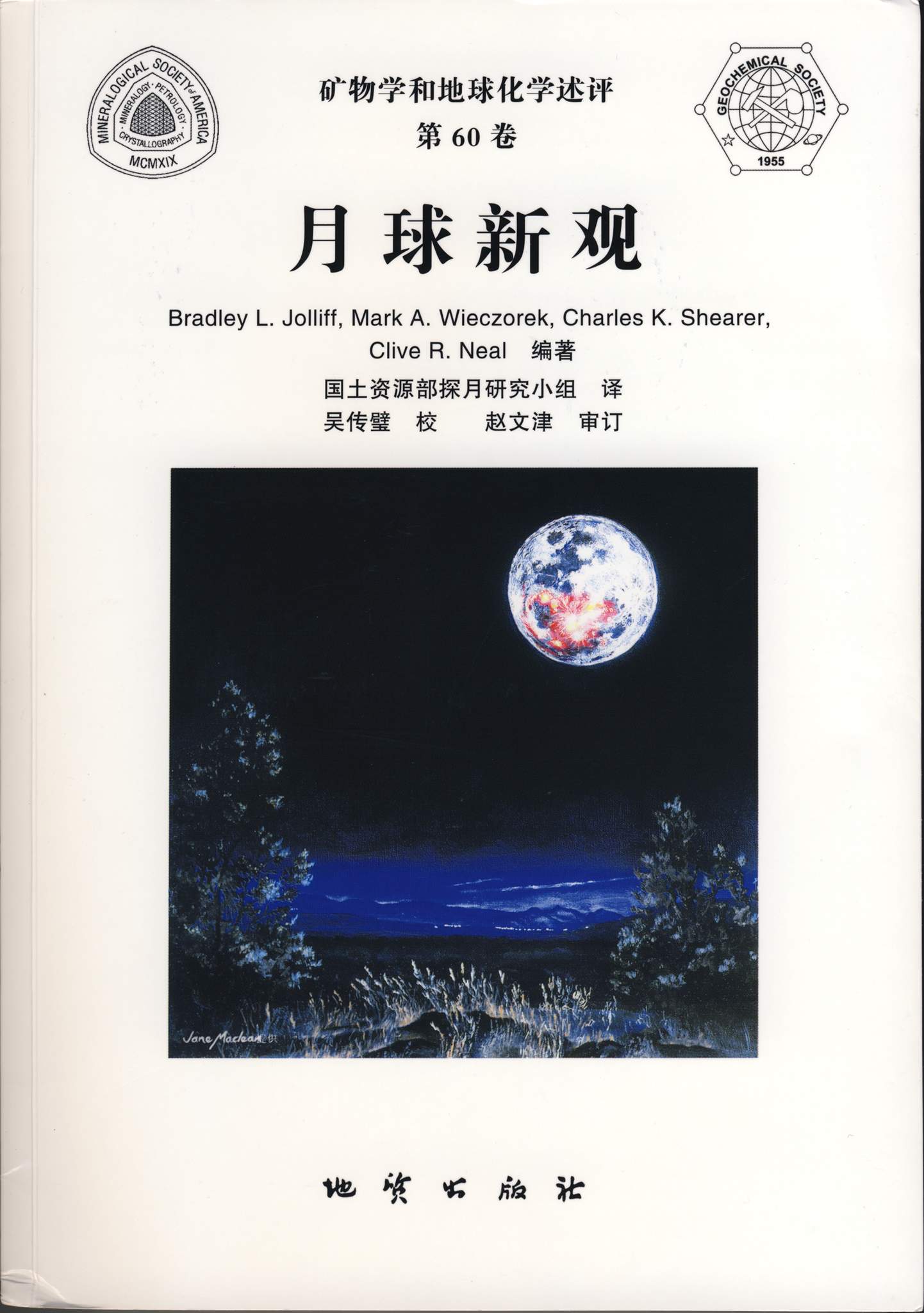
The very successful orbital missions of the 1990's, Clementine and Lunar Prospector, provided key mineralogical, geochemical, and geophysical data sets that extended our view of the Moon beyond what we knew from Apollo and Luna exploration to a truly global perspective. These new data sets have been integrated with information gained from three preceding decades of study of lunar samples and older, less complete remotely sensed data sets. Although there have been no new lunar sample-return missions since Apollo and Luna, new samples are available in the form of meteorites, recognized to be pieces of the Moon. These, too, play a role in improved knowledge of the Moon and in helping to couple information obtained by remote sensing with information obtained from rock and soil samples. As we stand on the edge of a new era of lunar and planetary exploration, including new missions to the Moon, Mars, and other planets and moons, we find it essential to examine in depth how the wide variety of data sets obtained during the course of lunar exploration can be used together to better understand the formation of the Moon and how it evolved to its present state. Such an understanding holds important lessons for the new era of lunar exploration as well as the exploration of other planets in the Solar System. This will ultimately lead to better knowledge of how our own planet Earth - with its unique environment suitable for the origin and evolution of life - originated and changed with time.
This book assesses the current state of knowledge of lunar geoscience, given the data sets provided by missions of the 1990's, and lists remaining key questions as well as new ones for future exploration to address. It documents how a planet or moon other than the world on which we live can be studied and understood in light of integrated suites of specific kinds of information. The Moon is the only body other than Earth for which we have material samples of known geologic context for study. This book seeks to show how the different kinds of information gained about the Moon relate to each other and also to learn from this experience, thus allowing more efficient planning for the exploration of other worlds.
Bradley L. Jolliff, St. Louis, Missouri, USA
Mark A. Wieczorek, Saint Maur, France
Charles K. Shearer, Albuquerque, New Mexico, USA
Clive R. Neal, Notre Dame, Indiana, USA
June, 2006
Title Page
p. i
Copyright
p. ii
Dedication
p. iii - iv
Preface
p. v - xv
Table of Contents
p. xvi - xxii
Chapter 1. New Views of Lunar Geoscience: An Introduction and Overview
by Harald Hiesinger and James W. Head III, p. 1 - 81
Chapter 2. Understanding the Lunar Surface and Space-Moon Interactions
by Paul Lucey, Randy L. Korotev, Jeffrey J. Gillis, Larry A. Taylor, David Lawrence, Bruce A. Campbell, Rick Elphic, Bill Feldman, Lon L. Hood, Donald Hunten, Michael Mendillo, Sarah Noble, James J. Papike, Robert C. Reedy, Stefanie Lawson, Tom Prettyman, Olivier Gasnault, and Sylvestre Maurice, p. 83 - 220
Chapter 3. The Constitution and Structure of the Lunar Interior
by Mark A. Wieczorek, Bradley L. Jolliff, Amir Khan, Matthew E. Pritchard, Benjamin P. Weiss, James G. Williams, Lon L. Hood, Kevin Righter, Clive R. Neal, Charles K. Shearer, I. Stewart McCallum, Stephanie Tompkins, B. Ray Hawke, Chris Peterson, Jeffrey J. Gillis, and Ben Bussey, p. 221 - 364
Chapter 4. Thermal and Magmatic Evolution of the Moon
by Charles K. Shearer, Paul C. Hess, Mark A. Wieczorek, Matt E. Pritchard, E. Mark Parmentier, Lars E. Borg, John Longhi, Linda T. Elkins-Tanton, Clive R. Neal, Irene Antonenko, Robin M. Canup, Alex N. Halliday, Tim L. Grove, Bradford H. Hager, D-C. Lee, and Uwe Wiechert, p. 365 - 518
Chapter 5. Cratering History and Lunar Chronology
by Dieter Stˆffler, Graham Ryder, Boris A. Ivanov, Natalia A. Artemieva, Mark J. Cintala, and Richard A. F. Grieve, p. 519 - 596
Chapter 6. Development of the Moon
by Michael B. Duke, Lisa R. Gaddis, G. Jeffrey Taylor, and Harrison H. Schmitt, p. 597 - 656
Chapter 7. Earth-Moon System, Planetary Science, and Lessons Learned
by Michael B. Duke, Lisa R. Gaddis, G. Jeffrey Taylor, and Harrison H. Schmitt, p. 657 - 704
Index
p. 705 - 721
Supporting Data Tables for Chapter 3, page 343, each with a link to a down-loadable MicroSoft Excel file.
Lunar Gravity, Topography and Crustal Thickness Archive of Chapter 3 of New Views of the Moon.
Color Plates of New Views of the Moon, each with a link to a down-loadable, electronic high-resolution version.